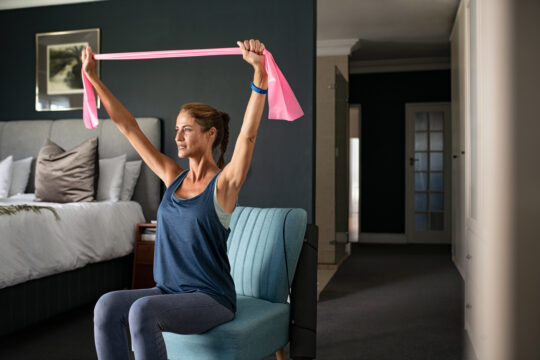
Staying active after 50 doesn't have to mean running, going to the gym, or even exercising on your feet. If standing workouts are difficult because of balance concerns, joint discomfort, limited mobility, recovery from an injury, or simply personal preference, chair exercises can provide an accessible way to keep moving.
And don't mistake seated exercise for doing nothing. From chair yoga and stretching to resistance bands and dumbbells, you can work many of the major muscle groups while remaining safely seated.
The National Institute on Aging (NIA) recommends incorporating different types of physical activity as we age, including aerobic activity, muscle strengthening, balance and flexibility. Strengthening exercises in particular can help older adults maintain the physical abilities needed to remain independent. Check out NIA’s YouTube channel HERE
All you need to get started is a sturdy chair—and perhaps a resistance band or pair of light weights.
Why Exercise From a Chair?
Chair workouts can be useful for adults who have difficulty with traditional exercise, but they can also be a convenient option for almost anyone.
Depending on the exercises you choose, seated workouts can help:
- Maintain or improve muscle strength
- Increase flexibility and range of motion
- Reduce stiffness
- Improve posture
- Keep joints moving
- Build upper- and lower-body strength
- Make physical activity more accessible for people with balance or mobility limitations
Best of all, you can exercise at home without expensive equipment.
Safety first: Choose a sturdy chair without wheels and place it on a nonslip surface. Start slowly and never force a movement that causes pain. Anyone with a medical condition, recent injury or surgery, significant balance problems, or concerns about beginning an exercise program should talk with a healthcare professional first. Consider wearing a Wearable Health Device to monitor your workout, movement, and provide an extra layer of safety. Find out more about them HERE
1. Chair Yoga: Stretch, Breathe and Move
Yoga doesn't have to involve getting down on a mat.
Chair yoga adapts traditional yoga movements so they can be performed while seated. Gentle movements can encourage flexibility and mobility while breathing exercises can add a relaxing component to your workout.
Try movements such as:
- Shoulder rolls
- Gentle neck stretches
- Seated side bends
- Seated spinal rotations
- Arm raises
- Ankle and foot movements
- Gentle forward bends
▶ Watch: 10-Minute Seated Yoga SilverSneakers offers a short seated yoga routine that can be done from a chair.This type of short routine can be a good starting point for someone who hasn't exercised recently. If you are not familiar, SilverSneakers is a fitness program that offers eligible older adults access to participating gyms, fitness classes, and online exercise resources. Learn more about the program at SilverSneakers.com. Another good option is Strength Training for Seniors and Beginners
2. Seated Stretching: Keep Your Body Moving
It's common to notice increased stiffness as we get older, particularly after spending long periods sitting. A few minutes of gentle stretching can help move the shoulders, neck, back, hips, knees and ankles through a comfortable range of motion.
Try:
Neck stretch: Slowly tilt your head toward one shoulder, return to center and repeat on the other side.
Shoulder rolls: Roll your shoulders backward several times and then forward.
Chest stretch: Sit tall, gently draw your shoulders back and open your chest.
Seated hamstring stretch: Extend one leg with your heel on the floor and gently lean forward while keeping your back comfortably straight.
Ankle circles: Lift one foot slightly and slowly circle your ankle in both directions.
Stretching should feel gentle. Avoid bouncing or forcing your body farther than it comfortably wants to go.
3. Resistance Bands: Strength Training Without Heavy Weights
A resistance band may look simple, but it can turn a chair workout into an effective strengthening session. Bands are inexpensive ($5-10), portable and available in different resistance levels, making it easy to begin with light resistance and gradually progress. Depending on your mobility and the type of band you're using, seated exercises can include:
- Biceps curls
- Chest pulls
- Rows
- Shoulder exercises
- Leg extensions
- Hip exercises
- Triceps exercises
▶ Watch: 18 Seated Resistance Band Exercises Keka Rehab Services offers a follow-along workout with 18 seated resistance-band exercises designed for older adults and beginners. The exercises target the arms, legs, core and posture using a resistance band and sturdy chair.
Beginner tip: Start with a light resistance band. Good form and controlled movement are more important than using a stronger band.
4. Seated Weights: Build and Maintain Muscle
Maintaining muscle becomes increasingly important as we age. Strength-training exercises can help maintain the strength needed for everyday activities and independence. You don't need heavy weights to begin.
A pair of light dumbbells—such as 1-, 2-, 3- or 5-pound weights depending on your ability—can add resistance to movements including:
- Biceps curls
- Shoulder raises
- Overhead presses
- Triceps extensions
- Bent-over rows
- Shoulder shrugs
If you don't have weights, practice the movements without them first until you are comfortable with the exercises.
▶ Watch: 10-Minute Seated Weights Workout More Life Health Seniors offers a seated dumbbell workout led by physiotherapist Mike Kutcher. The routine includes biceps curls, shoulder raises, rows, triceps extensions, leg raises, ankle circles and other movements.
5. Try a Seated Full-Body Workout
You don't necessarily need separate workouts every day. Another option is a routine that combines several types of movement into one session.
A simple seated exercise session might include:
5 minutes: Warm-up and gentle stretching
5–10 minutes: Chair yoga and mobility
10 minutes: Resistance-band or light-weight exercises
5 minutes: Gentle stretching and cool-down
You can also divide exercise into shorter sessions throughout the day. Or get crazy and do a Chair Zumba class. YouTube has so many great options to get you moving.
▶ Watch: 20-Minute Chair Workout HASfit offers a chair exercise workout for older adults and people who prefer a seated exercise routine.
Getting Started: Keep It Simple
If you haven't exercised in a while, don't worry about completing a long workout on your first day.
Start with 5 or 10 minutes and see how you feel.
As you become more comfortable, gradually increase the length of your workouts or the resistance you're using. The goal isn't to compete with anyone else. It's to find activities you enjoy enough to continue doing.
Keep a few things nearby:
- A sturdy, non-wheeled chair
- Comfortable clothing
- Supportive shoes when appropriate
- Water
- Light resistance bands
- Light dumbbells
Most importantly, listen to your body. Exercise can require effort, but sharp pain, dizziness, unusual shortness of breath, chest discomfort, or feeling faint are signals to stop and seek appropriate medical guidance. Be careful of overheating and know the signs of Heat Stroke. See AMAC’s article Playing It Safe in the Sun – Avoiding Heat Stroke
You Don't Have to Stand Up to Get Moving
Fitness after 50 doesn't have to look the same for everyone. For someone with limited mobility, a chair can make exercise more accessible. For someone already active, a seated routine can provide a gentler workout day. And for someone who hasn't exercised in years, a 10-minute chair workout may be an approachable first step.
Whether you choose chair yoga, stretching, resistance bands, light weights, or a combination of all four, what matters most is finding a safe way to move consistently. A sturdy chair might be all you need to get started.
See our related articles:
10 Proven Strategies for Healthy Aging: A Complete Guide for Senior Citizens
Stronger Bones, Better Balance, and More Energy This Summer
The Simple Approach More Adults Over 50 Are Using to Support Stronger Bones and Long-Term Mobility